Thinking about an electric car in 2025? Learn why EVs are better to drive, how they cut costs and emissions, and the key steps to choosing the right model.
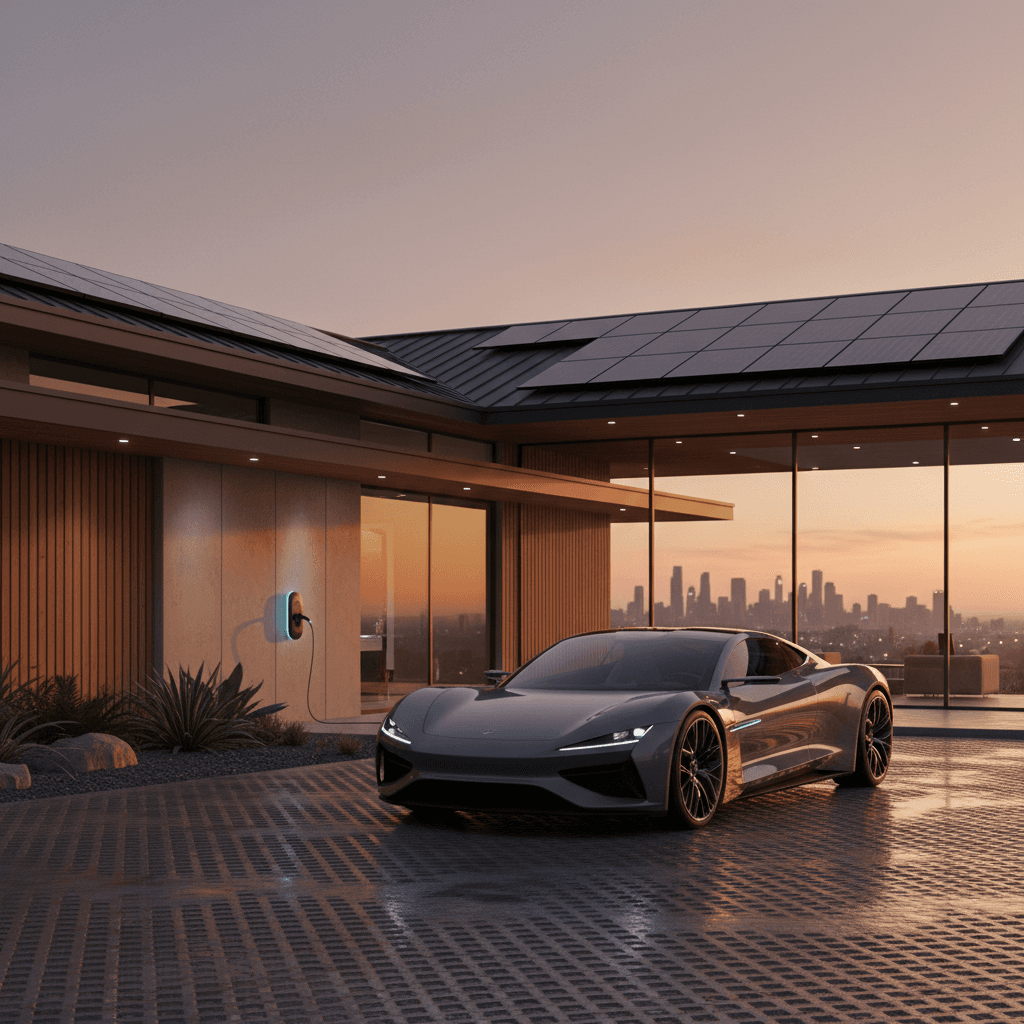
Why & How to Buy an Electric Car in 2025
Electric vehicles are no longer a niche experiment. As we move through late 2025, EVs sit at the center of the green technology revolution, alongside AI-driven smart grids, renewable energy, and intelligent transportation systems. For many drivers and businesses, the question has shifted from "Should I go electric?" to "How do I do it wisely?"
This guide expands on the simple idea that electric cars are superior technology—not just for the planet, but for your daily driving experience and long-term costs. We will walk through why EVs feel so different on the road, how they reduce your environmental footprint, what to evaluate before you buy, and practical steps to choose and own the right electric car in 2025.
Whether you are an individual commuter, a family planning your next vehicle, or a business exploring electric fleets as part of a broader green technology and AI strategy, this article will help you turn curiosity into a confident purchase decision.
1. Why Electric Cars Are Simply Better to Drive
The original primer is right on one point above all: you don't really understand EVs until you drive one. The technology feels fundamentally different from internal combustion engine (ICE) cars.
Instant, Smooth Acceleration
Electric motors deliver instant torque. Press the accelerator and the car responds immediately—no waiting for gear changes or engine revs.
What this means in practice:
- Quicker launches from traffic lights, even in modest EVs
- Smooth, linear power with no vibration from engine noise
- Effortless highway merging and overtaking
Once you get used to that instant, silent push, traditional engines can feel sluggish and dated.
Quieter, More Relaxing Ride
EVs lack a combustion engine, so there's no engine rumble, no idling vibration, and no gear shifts.
Drivers typically notice:
- Lower cabin noise, especially in city driving
- Less fatigue on long trips
- A feeling that the car "glides" rather than struggles
For many owners, this calm driving experience is one of the top reasons they stay electric for life.
Fewer Moving Parts, Less Maintenance
At the heart of an EV is a relatively simple system:
- Electric motor
- Battery pack
- Inverter and power electronics
There is no complex transmission, no exhaust system, no fuel injectors, and no oil changes.
This usually translates into:
- Lower routine maintenance costs over the life of the car
- Fewer unexpected repair bills
- Less time lost visiting service centers
For businesses managing fleets, the maintenance advantage alone can be a strong financial argument for electrification.
2. The Environmental and Green Technology Advantage
Buying an electric car is not just a personal upgrade; it's a high-impact climate action that fits squarely into the broader green technology story.
Lower Emissions Over the Vehicle's Life
Even when accounting for battery production and electricity generation, EVs generally have significantly lower lifetime emissions than gasoline vehicles.
Key factors:
- Electric motors are far more efficient than combustion engines.
- Many grids now include substantial wind, solar, and other clean energy sources.
- As the grid gets greener every year, your EV automatically becomes cleaner.
If you pair an EV with rooftop solar or participate in a community solar program, your driving can become close to zero-emission.
How AI and Smart Grids Make EVs Greener
In our Green Technology series, we often highlight the role of artificial intelligence in optimizing clean energy. EVs are a prime example:
- Smart charging systems use AI to charge vehicles when renewable energy is abundant or electricity is cheapest.
- Vehicle-to-grid (V2G) and vehicle-to-home (V2H) pilots allow EVs to temporarily feed power back to buildings or the grid during peak demand.
- Fleet operators use AI-based route and charging optimization to reduce energy use, costs, and emissions simultaneously.
Your EV is not just a car; it can become a flexible battery node inside a larger, intelligent energy ecosystem.
Cleaner Air, Quieter Cities
Tailpipe emissions vanish when you switch to electric:
- No local nitrogen oxides, particulate matter, or soot
- Reduced noise pollution in urban areas
For city planners working toward smart, sustainable cities, electrifying transport is one of the most direct ways to improve public health and quality of life.
3. Key Decisions Before You Buy an Electric Car
To move from excitement to a smart purchase, you need to answer a few practical questions about your needs and habits.
3.1 Understand Your Driving Pattern
Track or estimate your typical use:
- Daily commute distance
- Weekend and holiday travel (how often, how far)
- Access to home or workplace charging
Most modern EVs offer ranges that comfortably handle daily driving. For many people, the need to fast charge only arises on occasional long trips.
3.2 Decide on Range: How Much Is Enough?
Range anxiety remains one of the biggest psychological barriers, but it's often overstated.
Consider:
- If your daily round-trip is under 60–80 miles, almost any current EV is sufficient.
- For frequent long-distance drivers, aim for a long-range battery and strong fast-charging support.
Remember that extreme cold or high-speed driving can reduce range; give yourself a buffer of at least 20–30% beyond your typical maximum need.
3.3 Plan Your Charging Strategy
Think of charging as fueling at home or at work, not just at public stations.
Typical options:
- Home Level 1 (standard outlet): Slow but often enough if you drive modest daily distances and can charge overnight.
- Home Level 2 (240V): The sweet spot for most homeowners; adds dozens of miles of range per hour.
- Workplace charging: Ideal if your employer provides it; cuts your need for home infrastructure.
- Public DC fast charging: Best for road trips and occasional top-ups, not daily use.
For renters, investigate:
- Whether your building supports EV charging or plans to do so
- Nearby public chargers along your normal routes
3.4 Total Cost of Ownership (TCO), Not Just Sticker Price
Electric cars can still have higher upfront prices, but the total cost of ownership often tilts in their favor.
Account for:
- Lower cost per mile for electricity vs. gasoline
- Reduced maintenance (no oil changes, fewer mechanical parts)
- Potential incentives or rebates in your region
For businesses, model TCO over 5–10 years, including fuel, maintenance, downtime, and potential branding value from adopting clean transport as part of your green technology roadmap.
4. Step-by-Step: How to Choose the Right EV
Once you understand your needs, you can evaluate specific models and options more clearly.
4.1 Define Your Use Case
Start by clarifying how the car will primarily be used:
- Urban commuter: Prioritize compact size, efficiency, and ease of parking.
- Family vehicle: Focus on interior space, safety features, and cargo capacity.
- Business or fleet vehicle: Look for reliability, operating cost data, and telematics integration.
4.2 Compare Key Specs
When browsing models, pay attention to:
- Range (EPA or WLTP) under realistic driving conditions
- Charging speed: Maximum DC fast charge rate and AC onboard charger capacity
- Efficiency: Measured in kWh per 100 km or MPGe
- Warranty: Especially for the battery (years and mileage)
Also compare software features:
- Driver assistance and safety systems
- Over-the-air updates and app connectivity
- Smart charging and route planning capabilities
4.3 Test Drive with an EV Mindset
During test drives, evaluate factors that matter more in EVs:
- Smoothness of acceleration and regenerative braking
- Ease of using the infotainment and charging-related features
- Comfort and noise levels at highway speeds
Try to:
- Drive in city traffic and on a highway segment.
- Experiment with different regen settings (if available).
- Use the in-car navigation to simulate a long route with charging stops.
4.4 Think Ahead About Resale and Upgrades
The EV market is evolving quickly. To future-proof your purchase:
- Prefer models with a strong record of software updates.
- Consider brands with a growing charging ecosystem and service network.
- If you lease, match the term to your expectations about technology change and your own needs.
5. Making Your EV Part of a Smarter, Greener Lifestyle
Buying an electric car in 2025 is often the gateway to a broader green technology journey.
Connect Your EV to Clean Energy
To maximize your environmental impact and savings:
- Pair your EV with home solar (where possible) to charge from the sun.
- Consider smart home energy systems that schedule charging for low-tariff or high-renewable periods.
- Explore options from your utility for time-of-use rates or EV-specific plans.
Use Data and AI to Drive Smarter
Modern EVs generate a wealth of data. Combined with AI-powered apps and fleet platforms, this enables:
- Optimized routes that minimize energy use and travel time
- Predictive maintenance alerts based on real usage
- Insights into your carbon footprint and savings vs. a gasoline car
For businesses, integrating EV data into your wider sustainability analytics can help you track progress toward climate targets and identify new efficiency opportunities.
Advocate and Share Your Experience
EV owners often become powerful advocates:
- Share your charging and driving reality with friends or colleagues who are curious.
- Encourage workplaces and local authorities to expand charging infrastructure.
- Participate in EV owner communities that exchange tips and best practices.
Each new EV on the road accelerates the broader shift toward cleaner transport, smarter cities, and more resilient energy systems.
Conclusion: Your Next Car Can Be Part of the Climate Solution
Choosing an electric car in 2025 is no longer a risky experiment—it is a practical upgrade to a better driving experience, a strong economic choice over the vehicle's lifetime, and a meaningful step in the global green technology transition.
If you remember only a few points, let them be these:
- Electric cars offer instant, smooth acceleration, lower noise, and lower maintenance.
- They slash your driving emissions today and get cleaner as the grid gets greener.
- A smart buying process—understanding your range needs, charging options, and total cost—turns curiosity into confidence.
As you consider your next vehicle, ask yourself: will it lock you into the past, or plug you into the future of clean, intelligent mobility? The roadmap is clear, and with the right electric car, you can drive at the leading edge of the green technology revolution.