The Eaton Fire exposed how unprepared our urban recovery systems are. See how AI and green technology can turn disaster recovery into a faster, cleaner, fairer process.
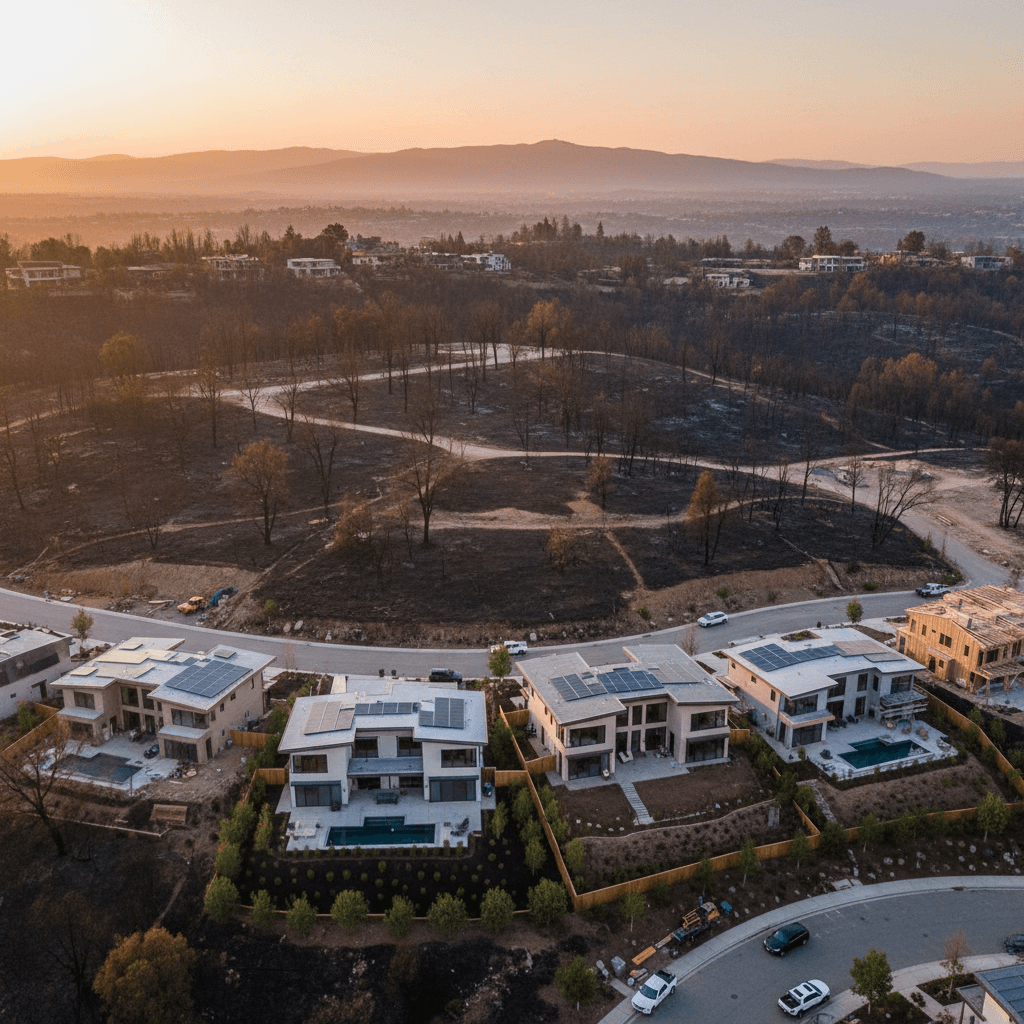
Urban Wildfires, Recovery Gaps, and the Rise of Green Tech
Ten months after the Eaton Fire tore through the foothills above Altadena, many families are still living out of hotels, relatives' spare rooms, or distant rentals. The flames are gone—but the disaster isn't. Permitting delays, outdated housing policies, and slow, manual remediation processes have turned what should be a months‑long recovery into a multi‑year ordeal.
This isn't just a local tragedy; it's a preview of California's future—and increasingly, a global one. As climate change pushes wildfire seasons longer and closer to dense urban areas, urban fire disasters will become more common. Yet our recovery systems were designed for slower, less complex crises. They are not ready for fast‑moving, high‑intensity, urban‑adjacent fires like the Eaton Fire.
In our Green Technology series, we usually focus on how AI, clean energy, and smart infrastructure prevent or reduce environmental damage. But prevention alone is no longer enough. We also need technology‑driven recovery systems that help communities rebuild faster, safer, and more sustainably. This post lays out a practical road map: what went wrong after the Eaton Fire, and how green technology and AI can transform disaster recovery into a resilient, low‑carbon, people‑first system.
1. The Eaton Fire as a Warning: Urban Wildfires Are the New Normal
The Eaton Fire, like many recent blazes near Los Angeles, wasn't a remote forest fire. It burned into the wildland–urban interface—where neighborhoods press up against canyons and dry brush. That makes it especially revealing for what's coming next.
How Urban Wildfires Break Old Assumptions
Traditional disaster plans assume:
- Fires are mostly rural or forest‑based
- Damage assessments can be done slowly, parcel by parcel
- Families can relocate temporarily while systems catch up
But urban wildfires like the Eaton Fire break all three assumptions:
- They hit dense neighborhoods, not just remote hillsides
- Infrastructure, schools, and transportation corridors are damaged at once
- High housing costs and tight rental markets mean "temporary relocation" quickly becomes unsustainable
Climate projections for California and the American West indicate more heat waves, longer drought periods, and wind‑driven fires that move fast. That means more Altadenas—communities on the edge of major metro areas facing fires that jump freeways and threaten thousands of homes in hours.
The lesson is clear: if our recovery systems cannot get one midsized urban‑adjacent community back on its feet in under a year, they are not ready for the decade ahead.
2. Why Recovery Fails: Permits, Policies, and Manual Processes
When families are still displaced ten months after a fire, the issue is no longer just the blaze—it's the system.
Bottleneck 1: Permitting Designed for Normal Times
Most building and environmental permits were designed for business‑as‑usual construction, not mass recovery after a disaster:
- Homeowners wait months for debris removal approvals
- Structural inspections are scheduled manually, one at a time
- Paper‑heavy processes require multiple in‑person visits
In a large‑scale urban fire, this framework collapses under volume. Even when funding is available, permits become the choke point between loss and rebuilding.
Bottleneck 2: Remediation That Ignores Environmental Data
After a fire, soil, ash, and air quality are serious health risks. But remediation decisions are often made with:
- Limited, manually collected samples
- Slow lab turnaround times
- Poorly integrated data between agencies
That leads to either over‑remediation (unnecessary cost and waste) or under‑remediation (long‑term health and liability risks). Neither supports true resilience.
Bottleneck 3: Housing Policy That Assumes Spare Capacity
California's housing market was already strained before the Eaton Fire. After the disaster:
- Displaced families compete in an already tight rental market
- Insurance coverage timelines rarely match real‑world rebuild timelines
- Lower‑income households are at highest risk of never returning
Recovery systems that assume abundant, affordable temporary housing are detached from today's reality. Resilience means rebuilding in a way that protects both people and long‑term housing stability.
This is where green technology and AI can do more than just optimize small steps—they can redesign the system.
3. A Green Tech Road Map for Disaster‑Ready Recovery Systems
To make recovery as modern as the climate risks we face, policy changes must be paired with intelligent, low‑carbon infrastructure and AI‑powered tools. Below is a practical road map.
3.1 AI‑Driven Damage Assessment and Permitting
The first step after a fire is knowing what's damaged, how badly, and what can be safely rebuilt. Today, that's mostly human inspectors, clipboards, and long queues. Instead, cities can deploy:
- Aerial and satellite imaging combined with AI to classify building damage levels within days
- Computer vision models trained on past fires to flag unsafe structures and prioritize inspections
- Digital permit portals that pre‑populate forms using assessment data, slashing processing times
A smart permitting platform could automatically:
- Pull in post‑fire imagery
- Generate a risk score for each parcel
- Suggest standard permit pathways (repair, rebuild, demolish)
- Route applications to the correct reviewers based on risk level
This not only accelerates approvals; it also creates a transparent, auditable trail that builds public trust and reduces opportunities for inequity.
3.2 Smart, Low‑Carbon Debris and Soil Remediation
The aftermath of an urban wildfire is a complex environmental cleanup challenge. Burned homes contain metals, plastics, treated wood, and hazardous chemicals. Green technology can ensure remediation is thorough and sustainable.
Key tools include:
- IoT sensors and mobile air monitors to track particulate and toxin levels in real time
- GIS dashboards to map hotspots and guide cleanup crews more efficiently
- AI optimization to plan debris hauling routes that minimize fuel use and emissions
- Material sorting technologies to reclaim metals and reduce landfill waste
Instead of blanket rules, cities can move to data‑driven remediation protocols:
- Clean where contamination is proven highest
- Use electric or low‑emission equipment where feasible
- Monitor air and soil quality continuously so residents know when it's safe to return
This transforms remediation from a blunt, expensive instrument into a targeted, science‑based, green operation.
3.3 Resilient, Green Rebuilding by Default
Rebuilding thousands of structures after a fire is an enormous opportunity: either recreate risk—or lock in climate‑ready, energy‑efficient housing and infrastructure.
Urban fire recovery plans can require or incentivize:
- High‑efficiency building envelopes and all‑electric homes
- Heat‑resistant, fire‑safe materials for roofs, siding, and landscaping
- Distributed solar and battery storage to keep communities powered during future grid disruptions
- Smart thermostats and energy management systems that reduce demand on hot, high‑risk days
AI can help here too:
- Design recommendation tools that generate code‑compliant, low‑carbon building templates
- Energy modeling that shows homeowners and developers long‑term savings from green upgrades
- Grid‑aware planning so new solar and storage assets support local resilience rather than strain infrastructure
For local governments and utilities, this is a chance to align wildfire recovery with clean energy and climate goals, instead of treating them as separate agendas.
4. Policy Shifts to Support Tech‑Enabled, People‑First Recovery
Technology alone won't fix a system that's built on outdated rules. The lesson from the Eaton Fire is that policy and green technology must move together.
4.1 Pre‑Approved Recovery Playbooks
Before the next fire season, jurisdictions can develop pre‑approved recovery frameworks, including:
- Emergency permit pathways with simplified requirements
- Pre‑negotiated contracts with remediation and modular housing providers
- Data‑sharing agreements between agencies to enable fast analysis
These playbooks should be embedded into digital platforms so that, when disaster hits, implementation is measured in hours and days—not months.
4.2 Equity‑Centered Recovery Planning
Tech systems must be designed to spot and correct inequities, not reinforce them. That means:
- Tracking which neighborhoods receive inspections and approvals first
- Using AI to identify households at high displacement risk (e.g., renters, low‑income families)
- Prioritizing support—temporary housing, grants, counseling—to those most likely to be permanently pushed out
Incorporating community feedback loops into digital platforms (hotlines, mobile apps, local data hubs) ensures residents can flag blind spots in real time.
4.3 Public‑Private Collaboration Around Green Tech
Businesses working in green technology—AI analytics, clean energy, modular construction—have a crucial role:
- Offering scalable platforms cities can adapt to local needs
- Providing data and modeling tools that inform better policies
- Piloting low‑carbon recovery projects that demonstrate what's possible on the ground
For organizations in the green tech space, disaster recovery is no longer a niche topic; it is a core market and responsibility in a warming world.
5. What Communities and Organizations Can Do Now
Even without sweeping state or federal changes, there are concrete actions communities, local governments, and businesses can take.
For Local Governments
- Audit your current recovery process: Map every step a fire‑impacted homeowner must take; identify delays and manual bottlenecks.
- Digitize critical workflows: Start with permit intake, status tracking, and communication.
- Invest in data infrastructure: GIS tools, secure data storage, and options to integrate aerial imagery and sensor data.
For Green Technology and AI Companies
- Develop modular, off‑the‑shelf tools for damage assessment dashboards, permit routing, and remediation planning.
- Focus on interoperability so your tools can plug into existing city systems.
- Design with non‑technical users in mind—frontline staff, inspectors, and community advocates.
For Community Organizations and Residents
- Advocate for transparent, digital tracking of recovery progress—by neighborhood, income level, and housing type.
- Push for green rebuilding standards that reduce bills and increase safety.
- Organize knowledge‑sharing: what worked, what failed, and what residents need most after events like the Eaton Fire.
Every incremental improvement—faster permitting, cleaner remediation, smarter rebuilding—adds up to a recovery system that honors both people and the planet.
Conclusion: Building Recovery Systems That Match the Climate Era
The Eaton Fire exposed a hard truth: California's future is here, but its recovery systems are stuck in the past. Families are still displaced not because we lack technology, funding, or know‑how, but because our processes and policies haven't caught up with the reality of urban wildfires.
A new model is possible. By pairing AI‑driven assessments, smart remediation, and green rebuilding with equity‑centered policies, we can turn disaster recovery into a catalyst for cleaner, safer, more resilient communities.
As we continue this Green Technology series, one question should guide both public and private leaders: Will the next major urban fire leave us repeating the same failures—or will we have built recovery systems intelligent and sustainable enough to bring people home faster, with a lighter footprint on the planet?