Queensland's 1,600MWh Punchs Creek solar-plus-storage project shows how grid-scale batteries, AI, and renewables are reshaping energy and business strategy.
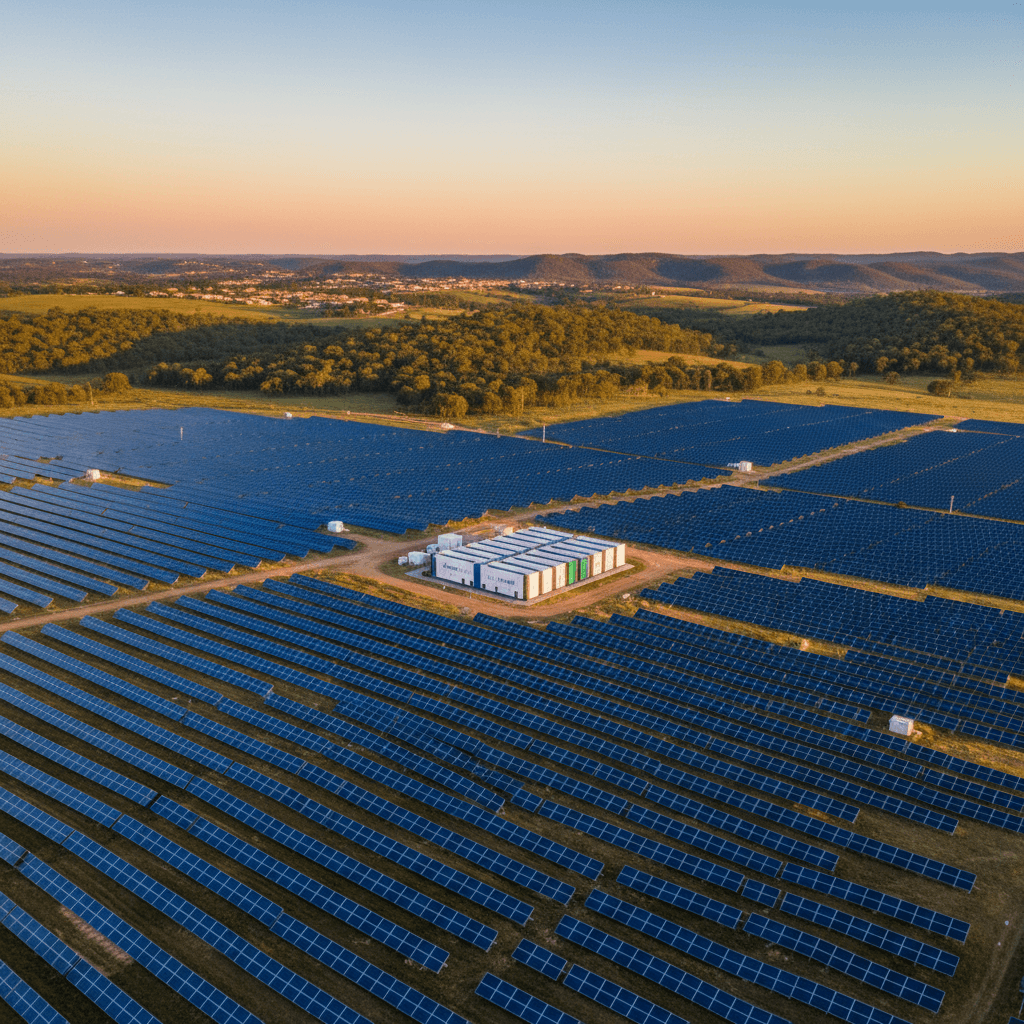
Solar-Plus-Storage in Queensland: A New Grid Model
Queensland is rapidly becoming a proving ground for green technology, and one of the most significant recent moves is the Punchs Creek Renewable Energy Project: a 1,600MWh solar-plus-storage project in the Toowoomba region, backed by Queensland Investment Corporation (QIC) and EDP Renewables Australia.
This is more than just another solar farm. By combining large-scale solar generation with a grid-scale battery energy storage system (BESS), Punchs Creek signals how solar-plus-storage will reshape electricity markets, grid reliability, and investment strategies across Australia and beyond.
In our Green Technology series, we've explored how AI, clean energy, and smart infrastructure are converging. This project shows those trends in action: using advanced energy storage, data-driven control, and long-term institutional investment to accelerate the transition to a cleaner, more resilient grid.
In this article, we'll unpack what the Punchs Creek project means, why 1,600MWh of storage capacity matters, and how businesses and energy users can position themselves to benefit from the solar-plus-storage revolution.
1. Inside the Punchs Creek Solar-Plus-Storage Project
Queensland Investment Corporation (QIC) and EDP Renewables Australia have signed an exclusivity agreement to develop the Punchs Creek Renewable Energy Project in the Toowoomba region of Queensland. While only high-level details are public, what we do know is critical:
- Technology mix: Large-scale solar generation combined with a 1,600MWh battery energy storage system (BESS)
- Location: Toowoomba region, an emerging renewable energy hub in southern Queensland
- Partners: QIC (institutional investor) and EDP Renewables (global renewables developer)
- Purpose: Deliver reliable, dispatchable renewable energy and support grid stability
Why 1,600MWh Is a Big Deal
MWh (megawatt-hour) is a measure of energy, not just power. A 1,600MWh battery can, for example:
- Supply 400MW for 4 hours, or
- 200MW for 8 hours, or
- A range of flexible power outputs depending on grid needs
This puts Punchs Creek firmly in the category of longer-duration storage compared with many early BESS projects designed mainly for short, high-value grid services. Longer-duration batteries are crucial to:
- Smooth out solar generation over entire evenings
- Cover peak demand periods when solar is no longer producing
- Reduce reliance on peaking gas plants and coal-fired generation
Why Queensland and Why Now?
Queensland's energy transition is accelerating:
- High solar resources and established transmission corridors
- Growing industrial and population centres in the south-east
- A state-level policy push towards renewables and storage
Punchs Creek is part of a broader renewables integration strategy: building not just more wind and solar, but the storage capacity and grid intelligence needed to make renewables reliable, predictable, and investable.
2. How Solar-Plus-Storage Changes the Grid
Solar-plus-storage is more than simply "solar plus a big battery." When intelligently controlled—often with AI and advanced analytics—it behaves like a flexible, clean power plant.
From Variable to Virtual Baseload
Traditional solar farms are non-dispatchable: they generate when the sun shines, not necessarily when demand is highest. By pairing generation with a BESS:
- Excess midday solar is stored instead of curtailed
- Energy is dispatched during late afternoon and evening peaks
- Output can be shaped to match market prices and grid needs
This turns variable solar into something approaching virtual baseload: highly reliable, controllable renewable energy that can compete directly with fossil fuel plants.
Key Value Streams of a Grid-Scale BESS
A 1,600MWh battery like the one proposed for Punchs Creek can unlock multiple value streams:
- Energy arbitrage: Buy (or store) electricity when it's cheap, sell when prices are high
- Peak shaving: Reduce grid stress and prices during demand peaks
- Frequency control and ancillary services: Provide rapid-response support to keep the grid stable
- Network support: Alleviate congestion, defer or avoid costly transmission upgrades
Well-designed projects can stack these services, improving economics and attracting investment from players like QIC.
The Role of AI and Green Technology
As we emphasize throughout this Green Technology series, AI-powered control systems are increasingly central to modern renewable assets. In a project like Punchs Creek, AI and advanced software can:
- Forecast solar output and demand using weather and market data
- Optimise when to charge or discharge the battery to maximise revenue
- Maintain battery health and extend asset life
- Coordinate with other generation sources in a virtual power plant (VPP)
This is where green technology goes beyond hardware. Intelligent software turns solar panels and batteries into smart, responsive infrastructure—exactly what a renewables-led grid requires.
3. Investment, Risk, and Opportunity in Large-Scale Storage
The involvement of QIC—a major institutional investor—underscores that battery storage is moving into the mainstream of infrastructure investment.
Why Institutional Capital Is Moving Into BESS
Investors are increasingly attracted to solar-plus-storage projects because they offer:
- Long-term, contracted revenues through power purchase agreements (PPAs)
- Exposure to growth in clean energy and electrification
- Portfolio diversification beyond traditional infrastructure
- Strong alignment with ESG and sustainability mandates
Projects like Punchs Creek demonstrate that large-scale BESS is no longer experimental. It's becoming a core component of national energy strategies.
Key Risks Developers and Investors Must Manage
Despite growing maturity, battery storage projects still face specific risks:
- Technology risk: Choosing the right chemistries and suppliers; managing degradation over time
- Revenue uncertainty: Depending on spot markets, ancillary services, and regulatory frameworks
- Grid connection risk: Delays or constraints in gaining and maintaining connection approval
- Policy risk: Changing rules for market access, incentives, and grid services
Sophisticated modelling, strong partners (like EDP Renewables), and robust contracts are essential to de-risk large-scale BESS.
Business Takeaways: Where Are the Opportunities?
If you're a business or organisation watching this trend, there are practical angles to consider:
- Corporate energy buyers: Explore PPAs or structured products that tap into solar-plus-storage projects for price certainty and emissions reduction
- Industrial users: Consider co-located or behind-the-meter storage to manage demand charges and increase resilience
- Technology providers: Focus on analytics, control software, and hardware that integrate seamlessly with grid-scale storage
- Local and regional stakeholders: Engage early on planning, workforce development, and community benefits
Punchs Creek is a signal: capital is ready, technology is mature, and the next wave of growth will favour those prepared to integrate renewables and storage strategically.
4. What Punchs Creek Means for Queensland's Energy Future
A 1,600MWh solar-plus-storage project does more than add capacity—it reshapes how the Queensland grid operates.
Supporting Coal Exit and Renewable Entry
As coal-fired power stations retire, the grid needs new forms of firm capacity. Storage can:
- Cover gaps when wind and solar are low
- Provide grid services traditionally delivered by synchronous generation
- Make higher renewable penetration technically and economically feasible
Punchs Creek and similar projects reduce reliance on fossil backups and build confidence that renewables can support the system around the clock.
Regional Economic and Community Benefits
For the Toowoomba region and surrounding communities, projects like Punchs Creek can bring:
- Construction and operational jobs over multi-year timelines
- Upgrades to local infrastructure and grid connections
- Opportunities for local businesses in services and supply chains
- Potential community benefit schemes aligned with sustainability goals
Thoughtful stakeholder engagement is critical to ensure local communities share in the benefits of the transition.
Integrating Solar-Plus-Storage With Smart Cities and Industry
Looking ahead, Queensland's smart city and sustainable industry ambitions depend on reliable, low-carbon electricity. Solar-plus-storage underpins:
- Electrification of transport (EV charging networks powered by clean energy)
- Decarbonisation of energy-intensive sectors
- Smarter, more flexible demand management at city and precinct scale
This is where the broader Green Technology narrative converges: AI-managed grids, distributed energy resources, and large-scale storage working together to support climate goals and economic growth.
5. How Businesses Can Prepare for a Solar-Plus-Storage Future
The Punchs Creek Renewable Energy Project is a glimpse of where energy markets are heading. Here are practical steps organisations can take now.
1. Map Your Energy and Emissions Profile
- Quantify your current energy use, costs, and emissions
- Identify exposure to price volatility and peak demand charges
- Understand how renewables and storage could stabilise costs and improve ESG performance
2. Explore Partnership Models
Depending on your scale and risk appetite, options may include:
- Long-term PPAs with solar-plus-storage projects for fixed or structured pricing
- On-site solar and storage for behind-the-meter optimisation
- Participation in virtual power plants (VPPs) or demand response programs
3. Integrate Data and AI Into Energy Decisions
Leverage green technology tools to:
- Forecast usage and optimise procurement
- Simulate scenarios with higher renewable penetration
- Support internal business cases for investing in clean energy solutions
4. Engage Early With Policy and Market Changes
Storage and renewables integration are driving rapid changes in:
- Network tariffs and demand charges
- Incentives and support schemes
- Grid connection and compliance rules
Staying informed—and, where relevant, actively contributing to consultations—helps ensure your strategy aligns with the evolving landscape.
Conclusion: Solar-Plus-Storage as the New Normal
The Punchs Creek Renewable Energy Project, with its 1,600MWh solar-plus-storage system, marks a pivotal step in Queensland's clean energy transition. It shows how green technology, advanced storage, and institutional investment are converging to deliver reliable, low-carbon power at scale.
As more projects like Punchs Creek connect to the grid, solar-plus-storage will move from pioneering to standard practice. For businesses, energy users, and communities, the question is no longer if this shift will happen, but how you will position yourself within it.
Now is the time to audit your energy strategy, explore partnerships with renewable and storage projects, and leverage AI-driven tools to make smarter, more sustainable decisions. The next generation of the grid is being built today—will your organisation be ready to plug into it?