An AI study shows 73% of chats are personal. Learn what this means for marketers, why editing beats writing at work, and how to build trusted AI.
The Big Shift the AI Study Reveals
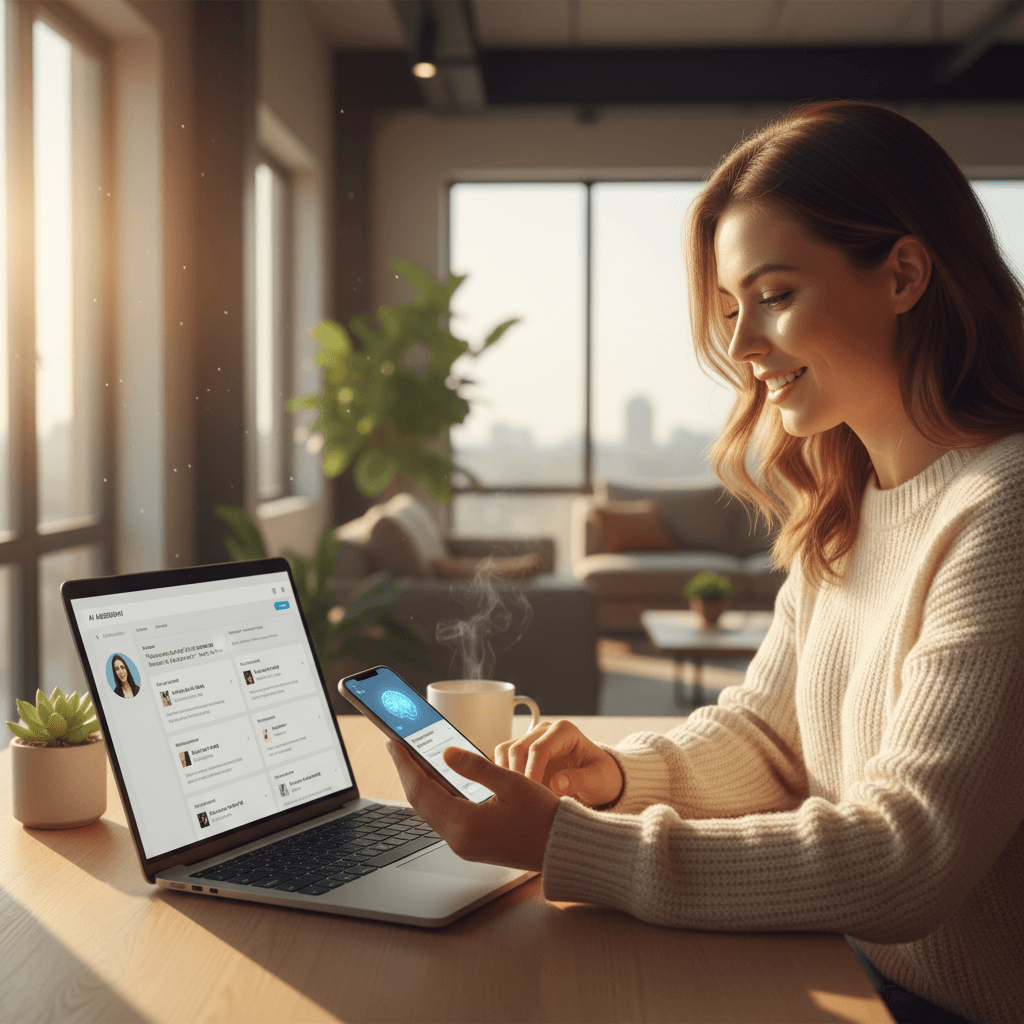
A new AI study across hundreds of millions of chats landed a surprise: 73% of usage is personal, not work. That headline changes how we think about discovery, loyalty, and conversion—because your brand now meets people in the intimate flow of everyday life. For the Vibe Marketing series—where emotion meets intelligence—this is a tipping point. If AI is a daily companion, then brand resonance must feel helpful, human, and immediate.
It's late November 2025. Holiday campaigns are peaking, 2026 planning is in full swing, and consumers are leaning on assistants for gift ideas, quick advice, and stress relief. The AI study matters now because it reframes your strategy: optimize not only for tasks, but for moments. That's where vibes form, and where decisions get made.
What people really ask (and why it matters)
- Relationship and life advice: Signals a trust gap to close with empathetic brand guidance, not hard sells.
- Homework and learning help: Opportunities for tutorial-style content and explainers.
- Small talk: A reminder that tone, warmth, and microcopy shape perception.
The path to purchase increasingly begins with a personal prompt.
To operationalize this, map personal intents to brand value:
- Inspiration: Gift guides, outfit builders, meal plans.
- Reassurance: Return policies, safety notes, ingredient explainers.
- Momentum: Checklists, quick-starts, and "do it with me" steps.
Editing Is the New Power Skill at Work
The same AI study found the #1 work task isn't writing net-new content—it's editing. Generative AI editing powers rewriting, tightening, summarizing, repackaging, and tone-shifting. This aligns with how pros actually work: they generate ideas, then spend most of their time polishing for clarity, brand voice, and compliance.
Editing is the meta-skill that unlocks productivity without sacrificing brand integrity.
A simple prompt-to-polish workflow
- Draft quickly (human or AI) to capture the idea.
- Use AI to improve structure, clarity, and flow.
- Apply brand voice and audience tone guidelines.
- Fact-check, cite or link sources internally, and add disclaimers where relevant.
- Run a final pass for accessibility, inclusivity, and SEO.
Example: Turn a rambling email into a clear pitch
- Input: A 300-word email with mixed goals.
- AI edit: "Rewrite to one-paragraph pitch + 3 bullets, friendly-professional tone, 6th-grade readability, CTA first."
- Human layer: Add brand proof points and legal notes; verify claims.
Make editing scalable with guardrails
- Create a "Brand Voice Kit" with sample paragraphs, banned phrases, and tone sliders (e.g., Formal ⟷ Friendly, Playful ⟷ Pragmatic).
- Standardize
instructionsblocks teams can paste at the top of prompts. - Track an "editorial delta %" (how much the final draft changes after AI) to identify where training or templates improve outcomes.
Designing for Human Vibes: From Small Talk to Support
The study's "strange" uses—relationship advice and small talk—aren't strange at all. They're proof that AI is a companion technology. For Vibe Marketing, this is a blueprint: pair precision with presence. Design experiences that answer the question and acknowledge the moment.
Make empathy operational
- Start with an "emotional snapshot" prompt: "User may be tired, anxious, or rushed—reply lightly, affirm first, keep steps short."
- Add microcopy that feels human: "I've got you" beats "Request received."
- Use transformations, not just answers: "Here's a 3-step plan" outperforms a paragraph of information.
Case vignette: A wellness brand in peak season
A DTC wellness brand sees spikes in chats about sleep, stress, and last-minute gifting. The assistant:
- Opens with a validating line ("Holiday weeks can be hectic—here's a calming 3-step plan.")
- Suggests a bundle with a clear return policy and a one-sentence benefits recap.
- Offers a 2-minute "wind-down" audio suggestion for immediate relief.
Result: Higher satisfaction scores, fewer escalations, and better conversion on bundles—because the brand met a personal need before making a pitch.
Holiday 2025 micro-plays
- Gift guides as conversations: "Who's it for? Budget? Vibe?" then produce 3 curated picks.
- Returns/sizing confidence: "Try, gift, or swap—no worries."
- Pre- and post-purchase check-ins: 24-hour follow-up with setup tips and delight moments.
Skill Gaps and Audiences: Novices, Experts, and Gen Z
The study notes AI is a great help for beginners but can frustrate experts. Build layered experiences.
For novices (AI for beginners)
- Use wizards: "Answer 4 questions, get your draft."
- Provide starter templates labeled by outcome (pitch, caption, summary, brief).
- Offer a visible "coach mode" that explains why the AI chose a structure.
For experts
- Enable
expert mode: fewer tips, more control, and fast toggles for temperature, length, and source constraints. - Support
brief-to-draftworkflows: paste a creative brief, lock requirements, and let AI fill the gaps. - Integrate snippet libraries and brand proof blocks for instant insertion.
Gen Z leads, gender gap closes
If Gen Z is the heaviest user cohort and gender usage is converging, make your AI and content:
- Visually clear, mobile-first, and fast.
- Inclusive in examples and imagery.
- Community-forward: highlight playbooks, challenges, and UGC prompts that invite co-creation.
Trust by Design: Reducing Hallucinations and Risk
The study warns about hallucinations—confidently wrong outputs. In Vibe Marketing, trust equals conversion. Bake verification into the system, not just the person.
A practical anti-hallucination stack
- Retrieval grounding (
RAG): Answer only from your approved docs. - Guardrails: Block sensitive topics or claims without verification.
- Source mode: "This answer cites Docs A, B, C" with snippet previews.
- Skeptic pass: A second AI agent checks dates, quantities, and names.
- Human-in-the-loop: Route high-impact responses to an editor.
Measurable quality signals
- First-right-answer rate: % of sessions needing no human fix.
- Claim coverage: % of statements with a verifiable source.
- Sentiment lift: Pre/post sentiment change after support interactions.
- Time-to-clarity: Seconds from prompt to actionable next step.
Governance checklist
- Tier content: evergreen vs. time-sensitive; lock time-sensitive behind mandatory source checks.
- Write standard disclaimers for advice and health/finance-adjacent answers.
- Maintain a red-team rhythm to probe failure modes monthly.
Action Playbooks You Can Run This Week
Personal Intent Map
- List your top 10 personal questions customers ask.
- For each, define the emotional state, the "one best next step," and a brand-safe answer pattern.
- Turn patterns into reusable prompt blocks.
Generative AI Editing Kit
- One-page voice guide with "do/don't" examples.
- 5 reusable prompts: summarize, tighten, tone-shift, outline, fact-check.
- QA rubric with a 10-point scoring system for editors.
Seasonal Sprint (Holiday 2025 → Q1 2026)
- Launch conversational gift guides and return reassurance flows.
- Train support on empathy-first openings and 3-step action frameworks.
- Set January optimization targets: reduce editorial delta, raise first-right-answer rate, and expand your source library.
In a year defined by everyday AI, the AI study's headline is clear: personal use dominates—and that's where brand preference is shaped. For marketers, the edge comes from two moves: mastering generative AI editing at work, and designing experiences that honor human vibes in personal moments. Do both, and you'll convert intent into trust and trust into growth.
If you want more hands-on guidance, join our Vibe Marketing community updates for playbooks, prompts, and workflows you can deploy immediately—no mystery, just momentum.
The next wave belongs to brands that treat AI as a companion experience, not just a content machine. How will you show up in your customer's next personal prompt?