AI browsers change how buyers discover and decide. Learn how to optimize for ChatGPT Atlas with a 90-day plan, new KPIs, and a 2026-ready marketing stack.
ChatGPT Atlas: Why Browsers Matter Again for Marketers
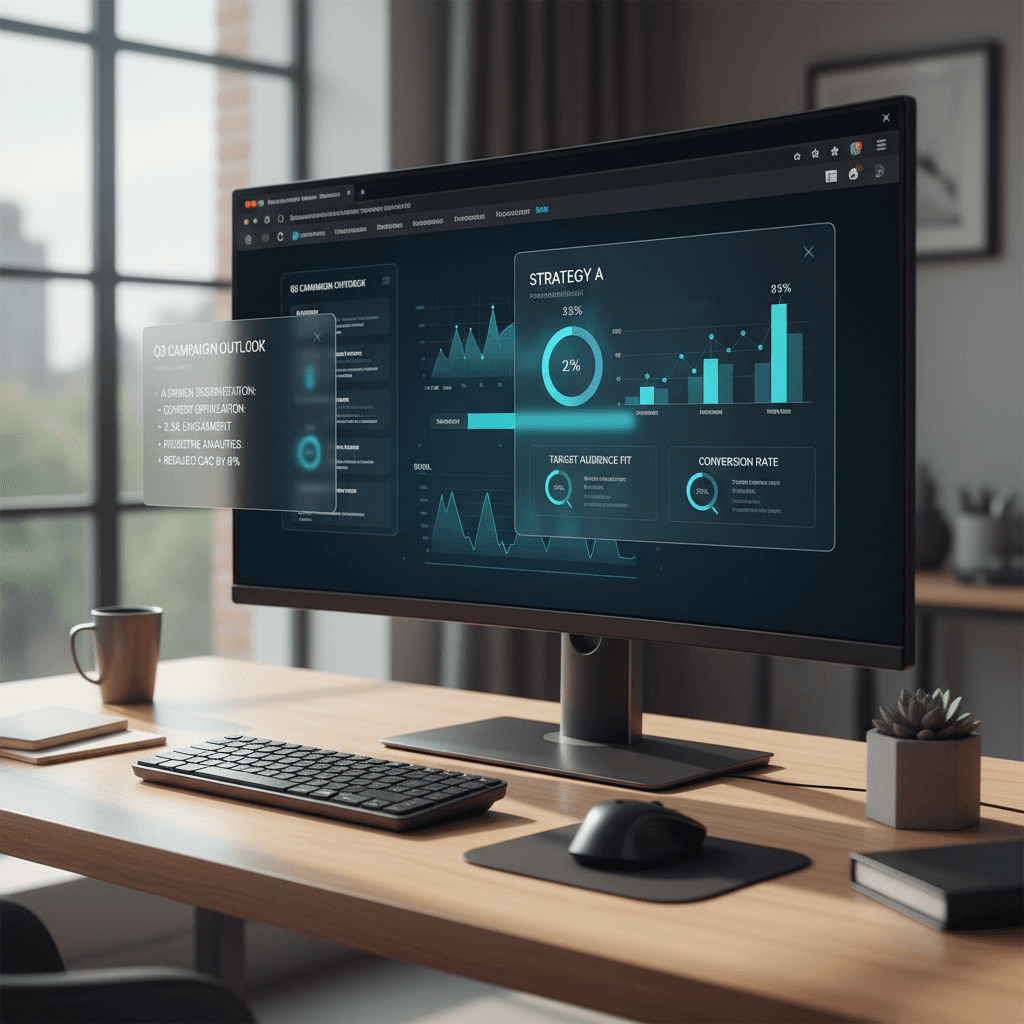
As AI moves from the search box into the browsing experience, marketers face a strategic reset. The launch of ChatGPT Atlas in October 2025 crystalized a trend that's been building for years: the browser itself is becoming the assistant—and the assistant is becoming the buyer's interface. For those building an AI-powered marketing orchestration stack for 2026, this shift isn't cosmetic. It changes where discovery happens, how influence is earned, and how conversions are measured.
For the past two years, teams optimized for LLM answers layered on top of search. Now the playing field is broader and closer to the moment of decision. With an AI-native browser experience—where agents summarize pages, compare vendors, extract specs, and draft outreach—the buyer journey is a co-browsed session, not a series of disconnected clicks. This post translates what that means for your 2026 tech stack and offers a practical blueprint to win in the AI browser era.
In this installment of our "AI-Powered Marketing Orchestration: Building Your 2026 Tech Stack" series, we'll map the new funnel, share a browser-first optimization plan, and outline the analytics you'll need to attribute value inside assistant-led sessions.
From SERPs to Sessions: The New AI Browser Funnel
The browser is the new marketing OS. Your content isn't just read—it's interpreted, summarized, and recommended by an agent sitting next to the user.
What changed
- Discovery now happens inside a co-browsed session: the user and an AI assistant navigate together.
- LLMs collapse research steps: comparisons, pros/cons, pricing rollups, and excerpts surface without tab-hopping.
- Decisions are accelerated: if your content isn't parseable, scorable, and quotable by agents, you're invisible at the moment it matters.
The AI browser funnel
- Discover: The assistant proposes sources to open, not just links to click.
- Co-browse: The assistant reads your page, extracts structured facts, and summarizes relevance.
- Co-decide: It compares you to alternatives and drafts buyer justifications.
- Convert: The assistant helps complete forms, schedule demos, or generate purchase requests.
Your orchestration stack must therefore optimize not only for rankings but for agent comprehension and in-session actions.
Build a Browser-Ready 2026 Tech Stack
To operationalize AI-powered marketing orchestration, reframe your stack around four pillars: content architecture, technical readiness, analytics attribution, and paid activation.
1) Content architecture for agent comprehension
- Create "agent-grade" pages: concise intros, clear headings, explicit FAQs, and short, extractable fact blocks.
- Maintain a machine-readable brand and product fact sheet (e.g.,
brand-facts.json) with SKU names, pricing models, integrations, SLAs, and support hours. - Standardize structured data: product, organization, FAQs, how-to, reviews, and event schema where applicable.
- Publish comparison-grade content: transparent side-by-sides with data tables and criteria definitions agents can parse.
- Keep pricing and specs consistent across pages and assets to avoid model confusion.
2) Technical readiness and performance
- Instrument first-party APIs for content and pricing so assistants can fetch current information reliably.
- Optimize page speed and render paths; AI browsers favor pages that return clean, complete HTML quickly.
- Use canonical tags, consistent titles, and descriptive meta summaries—agents read these signals.
- Provide accessible alt text and captions; multimodal agents increasingly rely on them.
- Implement privacy-first server-side tagging to reduce data loss in restricted environments.
3) Analytics and attribution for assistant-led sessions
Traditional session metrics miss where AI contributes. Expand your analytics to capture assistant influence.
- Define new events:
assistant_referralwhen a session starts from an AI prompt or in-browser suggestionassistant_summary_viewwhen a user expands an AI summary on your pageassistant_copy_extractwhen content is copied from defined fact blocksagent_action_completewhen an assistant helps submit forms or book meetings
- Build a "Session Influence Score" that weights assistant-originated touches alongside human clicks.
- Use server-side event streams to unify web, product, and sales interactions; tie to CRM for closed-loop learning.
- Create cohorts for "agent-assisted buyers" to compare velocity, ACV, and win-rates vs. traditional paths.
4) Paid activation that meets buyers in-session
- Test creative built for summaries: ultra-structured value props, price anchors, and trust signals that render well inside AI snippets.
- Shift part of SEM budgets to "answer formats" and content syndication that agents prefer to cite.
- Design landing experiences with "instant extraction"—top-loaded facts, tabular data, and a frictionless CTA.
- Align chat and human follow-up: route assistant-ready leads to reps with context from the session transcript where permissible.
AEO 2.0: Beyond Search—Answer Engine Optimization Inside the Browser
Answer Engine Optimization (AEO) isn't new, but in-browser assistants raise the bar. Think less about ranking and more about being the authoritative source an agent quotes.
What agents reward
- Clarity: short, unambiguous statements matched to common buyer questions.
- Consistency: identical facts across pages and assets to reduce hallucination risk.
- Comparability: normalized metrics and definitions the agent can line up across vendors.
- Credibility: verifiable claims, third-party proofs, and clear update timestamps.
Your AEO 2.0 checklist
- Write atomic answers: 40–80 word responses to your top 50 buyer questions.
- Structure your FAQs with schema and unique anchors; avoid duplicative phrasing across pages.
- Publish up-to-date "What's New" notes with dates; assistants prefer recent sources for fast-moving products.
- Provide calculators and checklists that return deterministic outputs agents can embed in summaries.
- Include "agent cues" in markup: descriptive headings like "Pricing Summary," "SLAs," "Security & Compliance," and "Integrations."
Measurement That Matches Reality: New KPIs for 2026
If the browser session is the battleground, your KPIs must reflect in-session influence.
- Share of Assistant Recommendations (SoAR): Percent of agent summaries that include your brand for a defined query set.
- Assistant-Originated Sessions (AOS): Sessions with clear AI referral signals.
- Extractable Fact Coverage (EFC): Portion of your core facts available as structured, up-to-date data.
- Agent-Assisted Conversion Rate (AACR): Conversions where an assistant engaged before form complete or booking.
- Decision Velocity: Time from first agent-led interaction to opportunity creation.
Use these alongside traditional pipeline metrics to calibrate spend and content priorities.
A 90-Day Action Plan to Operationalize
You don't need a full rebuild to get value. Sequence work across three sprints.
Days 1–30: Audit and foundations
- Map top buyer questions, competitive comparisons, and objection themes.
- Inventory facts: pricing, SLAs, integrations, certifications; resolve inconsistencies.
- Baseline metrics: AOS, AACR, and existing structured data coverage.
- Stand up server-side tagging and event definitions for assistant interactions.
Days 31–60: Content refactor and instrumentation
- Publish your machine-readable brand/product fact sheet.
- Refactor 10–15 high-impact pages with agent-grade structure and atomic answers.
- Implement schema across product, FAQ, and comparison pages.
- Add events for summaries, extracts, and agent-assisted actions.
Days 61–90: Experiments and enablement
-
Run 3–5 A/B tests on summary-first page patterns and comparison modules.
-
Pilot paid units optimized for in-summary clarity.
-
Enable sales with "agent-assisted lead" playbooks and updated talk tracks.
-
Review cohort performance; adjust content backlog and budgets by SoAR and AACR.
Team and Governance: Who Owns the Browser?
This shift crosses silos. Establish an "AI Browser Ops" pod that includes:
- Content strategist: owners of atomic answers and comparison frameworks.
- Technical SEO/AEO lead: structured data, markup, and site performance.
- Data engineer/analyst: event streams, attribution models, and dashboards.
- Marketing operations: journey orchestration and activation.
- RevOps/sales enablement: handoff and pipeline impact.
Set a monthly cadence to review SoAR, AACR, and Decision Velocity, then adjust the backlog accordingly.
Where This Fits in Your 2026 Stack Strategy
In our broader series on AI-powered marketing orchestration, the browser era changes two architectural choices:
- Your content layer must be dual-use: persuasive for humans and extractable for agents.
- Your data layer must observe assistant influence across channels and feed models that prioritize buyer readiness, not just traffic volume.
By designing for both, you'll shift from optimizing for clicks to orchestrating outcomes.
Conclusion: Marketers Who Win the Browser, Win the Buyer
ChatGPT Atlas signals a durable pattern: assistants are mediating how people evaluate options, not just how they find them. The winners will make their content easy for agents to quote, their facts impossible to dispute, and their analytics honest about where influence happens. Start with the 90-day plan above to harden your stack for 2026 and claim your share of assistant-led demand.
If you want help auditing your readiness or building an AI browser playbook, line up a working session with your team this month. The next budget cycle will reward those who've already tuned their orchestration to assistant-led sessions—because in this new era, the buyer isn't browsing alone, and neither should your strategy.