Fossil-fuel CO2 emissions are set to hit a new record in 2025. Discover how AI-powered green technology can cut emissions, protect carbon sinks, and drive action.
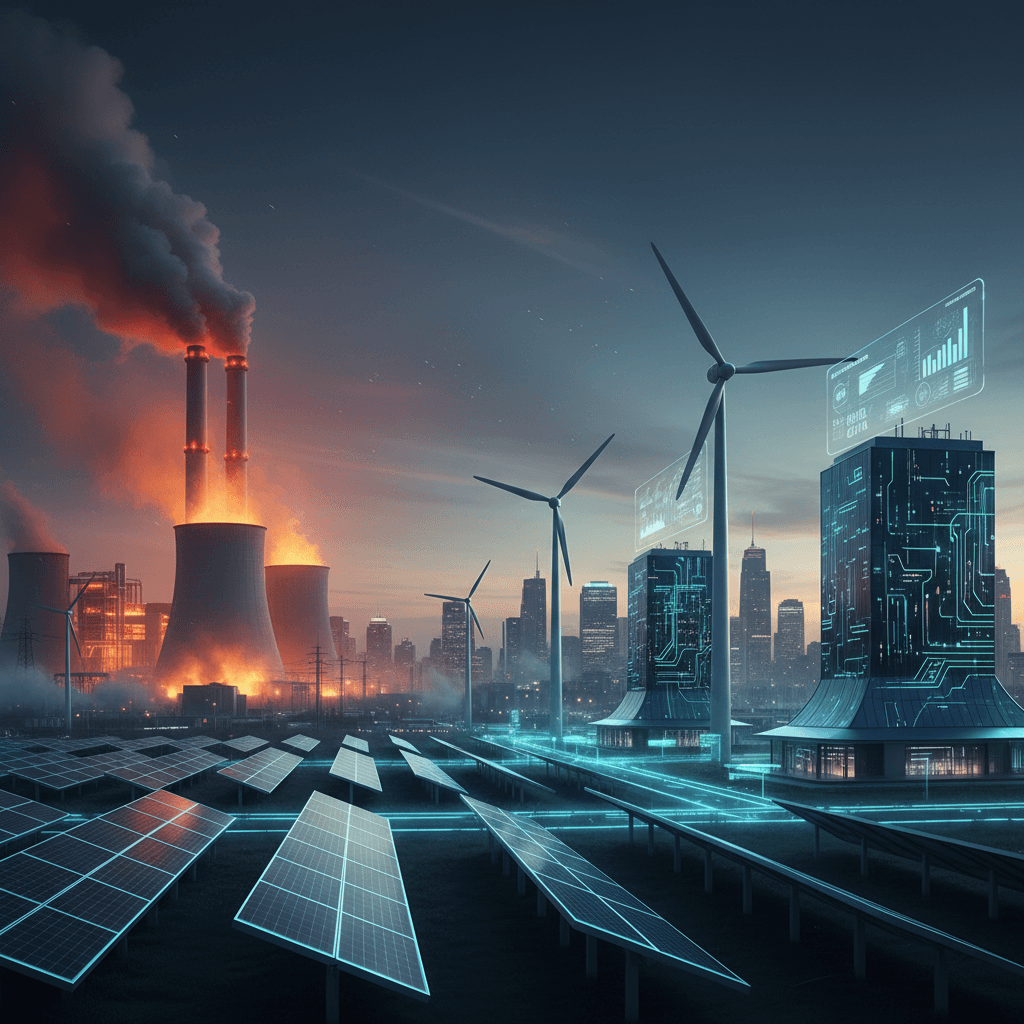
Record CO2 Emissions in 2025: How Green Tech Fights Back
Introduction: A New Record No One Wanted
In 2025, fossil-fuel CO2 emissions are projected to hit yet another record high, rising by around 1.1%. Even as some land-based carbon sinks show signs of recovery, the overall picture is stark: the world is still adding more carbon to the atmosphere than nature and technology can remove.
For businesses, cities, and innovators working in green technology, this is a critical inflection point. Climate risk is no longer a distant concern; it is a direct driver of regulation, investor pressure, and operating cost. The question is no longer if we transition away from fossil fuels, but how fast—and which technologies will define that shift.
This article unpacks what record fossil-fuel CO2 emissions in 2025 really mean, why the partial recovery of the land carbon sink is not enough, and how AI-driven green technology can help bend the emissions curve. You will also find practical steps for organizations that want to move beyond targets and into measurable decarbonization.
1. What a 2025 CO2 Record Really Means
The headline number—about 1.1% growth in fossil-fuel and cement CO2 emissions in 2025—might sound modest. But the context matters:
- Emissions are rising from an already high baseline.
- Every year of growth locks in more warming and more climate risk.
- The remaining "carbon budget" to keep warming near 1.5°C is shrinking rapidly.
Fossil fuels, cement, and structural inertia
The growth is driven mainly by:
- Continued dependence on coal and gas for power in many regions
- Rising oil demand in transport and petrochemicals
- Cement and steel production tied to urbanization and infrastructure
These are hard-to-abate sectors because they depend on large, long-lived assets (plants, pipelines, kilns) that cannot be swapped out overnight. Without targeted innovation—supported by data and AI—these sectors will continue to push global CO2 to new records.
Why small percentage increases are a big deal
A 1.1% rise might seem minor compared with past surges, but at today's scale:
- Each 1% increase adds hundreds of millions of tonnes of CO2.
- It compounds over time: a few years of "small" increases can erase the impact of many local climate actions.
- It makes future reductions steeper and more disruptive.
For organizations and policymakers, the implication is clear: incremental improvements are no longer enough. Emissions growth has to stop—and then reverse—this decade.
2. The Land Carbon Sink 'Recovers'—But Not Enough
Alongside the emissions record, scientists anticipate some recovery of the land carbon sink in 2025. Forests, soils, and other ecosystems that were weakened by droughts, fires, and heatwaves in recent years are expected to absorb a bit more CO2 again.
Understanding carbon sources and sinks
In the global carbon cycle, we can think in terms of two sides:
- Sources: Fossil fuel combustion, cement production, land-use change, industry
- Sinks: Oceans, forests, wetlands, soils, and emerging technological removals
When sinks are strong, they help offset a portion of our emissions. Historically, land and ocean sinks together have absorbed roughly half of human CO2 emissions each year.
Why the land sink is vulnerable
The term recovery is misleadingly comforting. The land sink is:
- Highly variable year-to-year due to weather patterns and climate extremes
- Sensitive to heat, drought, pests, and wildfires
- Finite: there is a limit to how much additional carbon ecosystems can store
Relying on a temporary rebound in the land sink while fossil-fuel CO2 keeps climbing is like relying on a discounted loan while your debts keep growing. It may soften the impact for a year, but it does not change the underlying trajectory.
The role of green technology in protecting sinks
This is where green technology and AI become strategic, not just "nice to have":
- Satellite and drone monitoring, powered by AI, can detect deforestation, degradation, and fires in near real time.
- Machine learning models can map carbon-rich ecosystems and prioritize protection and restoration.
- Precision agriculture can reduce pressure on forests by increasing yields with fewer inputs.
In other words, green technology is essential not only for reducing sources of CO2, but also for safeguarding and enhancing sinks.
3. Why Green Technology Is Central to Bending the Curve
If fossil-fuel CO2 emissions are setting records in 2025, it is not because we lack solutions. It is because we have not yet deployed them at the necessary scale and speed. Green technology, especially when combined with artificial intelligence, is one of the most powerful levers available.
Clean energy optimization with AI
Renewable energy is already mainstream, but AI is transforming how it is planned, integrated, and used:
- Smart grids: AI forecasts demand and renewable generation, enabling more solar and wind to be integrated without compromising reliability.
- Predictive maintenance: Machine learning detects failures in turbines, inverters, and transformers before they happen, increasing uptime and energy output.
- Storage optimization: Algorithms decide when to charge or discharge batteries to minimize emissions and costs.
For utilities and large energy consumers, these tools can significantly reduce the carbon intensity of electricity—one of the fastest ways to cut operational emissions.
Decarbonizing industry and cement
Cement and industry are among the largest and most stubborn sources of CO2, yet there is growing potential for smart decarbonization:
- Process optimization: AI-driven control systems can minimize fuel use and waste heat in kilns and furnaces.
- Alternative materials: Data-driven materials research accelerates the development of low-clinker cements and alternative binders.
- Carbon capture: AI simulation and control can improve capture efficiency and reduce energy penalties in carbon capture systems.
When combined, these measures can cut emissions per tonne of product, even before fully new technologies (like green hydrogen or next-generation cements) reach maturity.
Smart cities and low-carbon mobility
Cities concentrate both emissions and solutions. Smart city platforms powered by AI support:
- Traffic optimization to cut congestion and fuel waste
- Integration of public transit, shared mobility, and micro-mobility
- Dynamic building management systems that reduce heating, cooling, and lighting demand
Each of these reduces fossil-fuel CO2 in a tangible way. At city scale, they can offset the equivalent of multiple coal plants over time.
4. From Emissions Data to Action: How Organizations Can Respond
Record CO2 emissions in 2025 are not just a global statistic; they are a strategic signal for businesses, cities, and institutions. The most resilient organizations will treat this as a catalyst to accelerate their transition, not as a discouraging headline.
Step 1: Measure your true carbon footprint
You can't manage what you don't measure. Start by building a granular picture of your emissions:
- Scope 1: Direct fuel use (vehicles, boilers, on-site generation)
- Scope 2: Purchased electricity and heat
- Scope 3: Supply chains, product use, travel, waste, and investments
AI-enabled carbon accounting platforms can:
- Ingest large volumes of operational data
- Estimate emissions factors dynamically
- Flag high-impact reduction opportunities by facility, process, or supplier
Step 2: Prioritize high-impact green technologies
Instead of spreading resources thinly, focus on measures that cut the most CO2 per dollar and integrate well with your operations. Examples include:
- Energy efficiency retrofits guided by building analytics
- Electrification of fleets and process heat where grids are decarbonizing
- On-site renewables coupled with smart energy management
- Process redesign to remove unnecessary energy and material use
AI can rank these options by cost, feasibility, and emissions impact, helping leaders build a data-driven decarbonization roadmap.
Step 3: Protect and leverage natural and technological sinks
Even with aggressive reductions, some residual emissions will remain. A credible climate strategy should:
- Support high-quality nature-based solutions (reforestation, soil carbon, wetlands) informed by strong monitoring and verification.
- Explore tech-based removals (such as direct air capture or advanced biochar) as costs fall and standards evolve.
- Use AI-powered remote sensing and modeling to ensure claimed removals are real and durable.
The goal is not to rely on offsets as an excuse for inaction, but to use them strategically alongside substantial absolute emission cuts.
5. Looking Ahead: Turning a Record Year into a Turning Point
The projection that fossil-fuel CO2 emissions will reach a new record in 2025, even as the land sink partially recovers, underscores a simple truth: we are still moving in the wrong direction, just a bit more slowly.
Yet this is also a moment of unprecedented opportunity. Clean energy costs have fallen, green technology is maturing fast, and AI is giving us new tools to optimize complex systems, from power grids to global supply chains. The organizations that move first will not only reduce climate risk; they will also unlock efficiency, resilience, and competitive advantage.
As part of this ongoing Green Technology series, the message is consistent: climate action is no longer separate from digital transformation or business strategy—it is at the center of both. The combination of AI and green technology is how we shift from incremental improvements to the deep, systemic changes needed to stop setting new emissions records.
Now is the time to ask:
- Where are your biggest fossil-fuel CO2 sources?
- Which green technologies could cut them fastest?
- How can AI help you design, prioritize, and execute that transition?
The global numbers for 2025 are not yet written in stone. The decisions made by today's leaders—about technology, investment, and policy—will determine whether this decade is remembered as the era of record emissions, or the moment we finally bent the curve.